Understanding AI-Powered Marketing Analytics
AI-powered marketing analytics refers to the use of artificial intelligence to analyze marketing data and optimize decision-making processes. By integrating tools like OpenAI’s machine learning models and predictive analytics, marketers can derive actionable insights that significantly improve return on investment (ROI).
Key Benefits of AI in Marketing Analytics
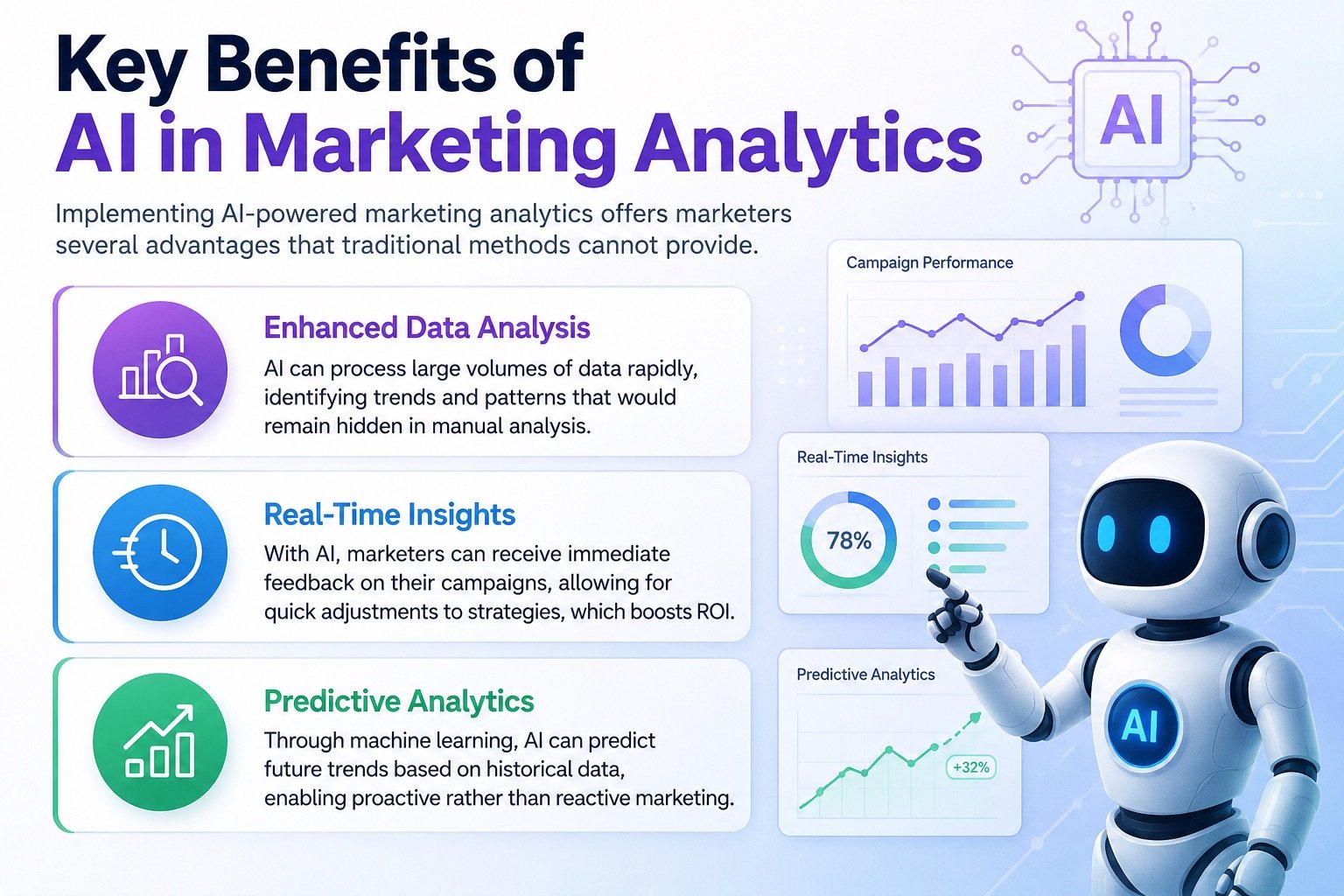
Implementing AI-powered marketing analytics offers marketers several advantages that traditional methods cannot provide.
- Enhanced Data Analysis: AI can process large volumes of data rapidly, identifying trends and patterns that would remain hidden in manual analysis.
- Real-Time Insights: With AI, marketers can receive immediate feedback on their campaigns, allowing for quick adjustments to strategies, which boosts ROI.
- Predictive Analytics: Through machine learning, AI can predict future trends based on historical data, enabling proactive rather than reactive marketing.
Tools for AI-Powered Marketing Analytics
There are various AI-powered tools available that marketers can use to enhance their analytics capabilities:
- Google Analytics 4: This platform offers advanced machine learning features to provide insights about user behavior.
- HubSpot: Known for its robust CRM, HubSpot uses AI to analyze collected data and provide insights that drive marketing strategies.
- Tableau: This data visualization tool incorporates AI capabilities to turn complex data sets into clear, actionable insights.
Implementing AI-Powered Marketing Strategies
To maximize ROI effectively, companies should adopt best practices when implementing AI in their marketing analysis:
- Define Clear Objectives: Establish specific goals for what you aim to achieve with AI analytics.
- Train Your Team: Invest in training for your marketing team on how to interpret insights from AI tools.
- Regularly Review and Adapt: Continuous assessment of AI tool performances is critical to ensure effectiveness over time.
This aligns with concepts discussed in our recent article on content marketing trends, where staying updated on tools and techniques is essential for success.
Challenges of Adopting AI-Powered Marketing Analytics
While the benefits are clear, there are some challenges marketers face when adopting AI in their analytics:
- Cost of Implementation: Initial investments in AI tools and training can be significant.
- Data Privacy Concerns: Companies must ensure they comply with laws about data privacy and protection.
- Siloed Information: Data can often be scattered across different platforms, making it difficult to aggregate insights.
Case Studies of Success
Many brands have seen substantial benefits from integrating AI into their marketing analytics:
- Netflix: By analyzing viewer data using AI, Netflix tailors its content recommendations, significantly enhancing user engagement.
- Amazon: The e-commerce giant uses AI-driven data analysis to optimize its advertising and product recommendations.
For more on optimizing advertising campaigns, check out our guide on mastering Google Search Ads.
Frequently Asked Questions
What is AI-powered marketing analytics?
AI-powered marketing analytics involves using AI technologies to analyze marketing data and deliver insights that help in decision-making and strategy optimization.
How can AI improve marketing ROI?
AI improves marketing ROI by offering real-time insights, predictive analytics capabilities, and enhanced data processing, allowing for quick strategy adjustments.
What are some challenges of using AI in marketing analytics?
Challenges include the cost of implementation, data privacy concerns, and the need for proper integration of data from various sources.